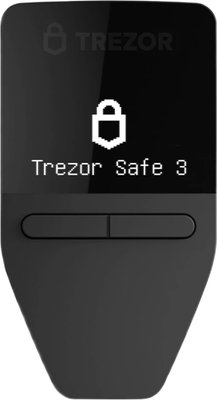
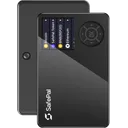
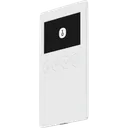
The Trezor Safe 3 is a solid mid-range option at $59 with a meaningful security upgrade over its predecessors. Its EAL6+ Secure Element, fully open-source firmware with reproducible builds, and SLIP39 Shamir Backup support make it one of the more verifiable wallets at this price point. The undisclosed Secure Element manufacturer is a transparency gap that security-focused buyers should not overlook.
The Trezor Safe 3 ships with a dedicated secure element rated EAL6+ — a meaningful step up from the EAL5+ found in Ledger's ST33K1P5 chip used in the Nano X. However, Trezor has not disclosed the chip manufacturer or exact model, listing it only as "Secure Element (unspecified)." That lack of transparency is a real concern: you cannot independently audit what you cannot identify. Ledger discloses its STMicroelectronics chip lineage; Trezor does not.
On the firmware side, the Safe 3 runs fully open-source firmware with reproducible builds — meaning anyone can compile the firmware from source and verify the binary matches what Trezor distributes. This is a concrete, auditable claim, unlike Ledger's closed-source firmware which requires trusting the vendor entirely. Firmware updates are signed by Trezor's keys and verified on-device before installation.
Genuine device verification is supported via a cryptographic check during first boot — vendor claims this detects supply chain tampering, though the mechanism relies on Trezor's own attestation infrastructure, not a third-party audited process. Secure boot is implemented, preventing unsigned firmware from running.
The Safe 3 has a known historical vulnerability class: earlier Trezor models (Model T, One) were susceptible to physical extraction attacks requiring chip decapping. The EAL6+ secure element on the Safe 3 is specifically intended to address this, but no independent lab has published confirmation of resistance to glitching attacks post-launch as of this writing. Compared to the Coldcard Mk4, which uses a dual-chip architecture with a ATECC608 secure element and has extensive third-party pen test documentation, Trezor's security posture is strong but less externally validated.
SecurityKey Factor
The Trezor Safe 3 generates seed phrases entirely on-device, supporting both BIP39 (12 or 24 words) and SLIP39 (Shamir Backup). The 12-word default is convenient but offers 128 bits of entropy — sufficient by current standards, though security-maximalists may prefer 24-word generation available on competing devices like the Coldcard Mk4.
Shamir Secret Sharing (SLIP39) is a standout feature: you can split your seed into multiple shares (e.g., 2-of-3 or 3-of-5) so no single backup location holds the full secret. Passport (Foundation Devices) does not natively support Shamir; Coldcard does not either. This gives the Safe 3 a concrete edge for users with sophisticated backup strategies.
Passphrase support (BIP39 25th word) is fully implemented, enabling hidden wallets — a standard feature across competitors but correctly executed here with on-device entry to avoid host compromise.
Recovery on a new device requires entering your seed words or Shamir shares via the device's physical buttons — no camera, no QR import. The process is straightforward but slower than QR-based recovery on devices like the Passport 2, which uses a camera for airgapped seed import. If your Safe 3 is lost or destroyed, any BIP39-compatible wallet (Sparrow, Electrum, Trezor Suite) can restore funds — no vendor lock-in. Metal backup plates (e.g., Cryptosteel) are compatible with both BIP39 and SLIP39 word lists.
Recovery & backups
Initial setup takes approximately 10–15 minutes including firmware verification, PIN creation, and seed backup. The process is guided through Trezor Suite, Trezor's desktop/web companion app, which walks new users through each step with clear instructions. No account creation is required to complete setup.
The display is a 0.96-inch OLED screen — functional but small. Transaction details (addresses, amounts) are readable but require scrolling through long addresses, which increases the risk of confirmation fatigue. By comparison, the Ledger Stax uses a 3.7-inch E Ink touchscreen and the Foundation Passport 2 uses a larger color display — both significantly easier to verify full addresses at a glance. Navigation on the Safe 3 uses two physical side buttons, which are tactile and reliable but slower than touchscreen alternatives.
Daily use for sending and receiving is straightforward: connect via USB-C, open Trezor Suite, initiate transaction, verify on device, confirm. Trezor Suite is available on Windows, macOS, Linux, and Android — notably absent from iOS. The Android app is functional but has fewer features than the desktop version.
Trezor Suite's interface is among the cleaner desktop wallet UIs available, with coin control, transaction labeling, and a built-in exchange (Invity). New users with no prior hardware wallet experience will find the onboarding manageable; users coming from software wallets will adapt within one session. Advanced users wanting airgapped operation will find the USB-only connectivity a limiting factor.
Usability / UX
The Trezor Safe 3 supports over 9,000 coins and tokens via Trezor Suite, including Bitcoin, Ethereum, Solana (vendor-claimed, verify current status), and major ERC-20 tokens. Key L1 chains covered include Bitcoin, Ethereum, Litecoin, Bitcoin Cash, XRP, Cardano, and Stellar.
Third-party wallet integration is broad: MetaMask works via WebUSB for EVM chains, Electrum and Sparrow Wallet both support the Safe 3 for Bitcoin-specific workflows including PSBT and coin control. Sparrow integration is particularly clean, making the Safe 3 a viable option for serious Bitcoin users who want open-source desktop tooling.
WalletConnect is not natively supported on the device itself — DeFi interactions route through MetaMask or similar browser extensions connected to the Safe 3 via WebUSB. This works but adds steps compared to devices with native WalletConnect like the Ledger Nano X via Ledger Live. NFT display is not supported on-device; the 0.96-inch OLED makes this a hardware limitation, not just a software gap.
Multisig is supported at a basic level — functional for Bitcoin multisig via Sparrow but lacks the dedicated multisig coordinator workflows found in Coldcard Mk4 with its native PSBT airgap tools. For straightforward single-sig use across major chains, the ecosystem coverage is competitive.
Ecosystem & integrations
No account registration is required to use the Trezor Safe 3 — setup and operation work without providing an email address or personal data to Trezor. Trezor Suite does collect anonymized analytics by default; this can be opted out during setup or in settings, but it is opt-out rather than opt-in, which is a privacy-unfriendly default.
Trezor Suite supports Tor routing natively — a toggle in settings routes Suite's network traffic through Tor, masking your IP from Trezor's servers and blockchain explorers. This is a concrete privacy feature absent from Ledger Live. The device can also be used with Sparrow Wallet pointed at your own Bitcoin node over Tor, achieving full network privacy for Bitcoin use.
CoinJoin is supported natively within Trezor Suite via the Wasabi Wallet-powered implementation — a direct privacy advantage over Ledger's hardware lineup, which has no native CoinJoin. However, compared to Coldcard Mk4 paired with Sparrow/JoinMarket, or Passport 2 with its airgapped architecture and no USB data connection, the Safe 3's USB-only connectivity means the host computer is always in the communication path. For maximum privacy, airgapped alternatives remain superior.
Privacy
The Trezor Safe 3 retails at $59 USD, positioning it as a mid-range hardware wallet. Direct competitors at comparable or nearby price points:
Ledger Nano X — $149: Bluetooth, larger ecosystem app support, but closed-source firmware and no reproducible builds
Ledger Nano S Plus — $79: No Bluetooth, similar form factor, closed-source firmware
Foundation Passport 2 — $199: Open-source, airgapped QR, color display — significantly more capable but 3.4x the price
Trezor Model One — $49: No secure element, lower security ceiling — $10 less but meaningfully weaker
At $59, the Safe 3 delivers open-source firmware, reproducible builds, EAL6+ secure element, and Shamir Backup — a combination no competitor matches at this price. The Ledger Nano S Plus costs $20 more and offers none of those software transparency features.
Best value for: Users who prioritize open-source auditability and want Shamir Backup without spending $199+ on a Passport. Intermediate Bitcoin and Ethereum users. Anyone moving up from a Trezor Model One.
Consider spending more if: You need airgapped operation (Passport 2, Coldcard), a larger screen for address verification (Ledger Stax at $399), or advanced Bitcoin-only multisig tooling (Coldcard Mk4).
Price & value
The Trezor Safe 3 is a well-rounded, security-focused hardware wallet that punches above its $59 price point, particularly for users who value open-source transparency and flexible recovery options — though it makes a few compromises that will matter to certain buyers.
Buy this wallet if:
You are a privacy-conscious user who demands fully open-source, reproducible firmware and wants to verify every line of code protecting your funds.
You need advanced recovery flexibility — the Safe 3's support for both BIP39 and SLIP39 Shamir Secret Sharing lets you split your seed across multiple trusted locations, a meaningful upgrade over basic single-backup wallets.
You are a desktop-first user on Windows, macOS, or Linux who wants a compact, battery-free device that simply works via USB without any wireless attack surface.
Skip this wallet if:
You rely heavily on iOS — the Safe 3 has no iOS compatibility, making it a poor fit for iPhone-centric users. Consider the Ledger Nano X ($149), which offers broad mobile support including iOS via Bluetooth.
You want air-gapped signing without a physical cable. The Safe 3 lacks QR code or NFC connectivity, so if a fully air-gapped workflow is critical, look at the Keystone 3 Pro instead.
You need enterprise-grade multisig workflows — the Safe 3 offers only basic multisig support, which may frustrate power users managing complex setups.
If choosing between the Trezor Safe 3 and the Ledger Nano S Plus ($79): The Safe 3 wins on recovery options and open-source credentials, while the Nano S Plus edges ahead on app breadth and iOS compatibility. If choosing between the Trezor Safe 3 and the Trezor Model One ($49): Spend the extra $10 — the Safe 3's EAL6+ Secure Element and Shamir backup support make it a meaningfully more secure device for a negligible price difference.
At $59, the Trezor Safe 3 earns its place as a strong entry-level-to-mid-range option for security-minded users who live in the open-source ecosystem. Keep the final rating in mind when weighing it against alternatives in this price bracket.
✓ Our Verdict
The Trezor Safe 3 is a well-rounded, security-focused hardware wallet that punches above its $59 price point, particularly for users who value open-source transparency and flexible recovery options — though it makes a few compromises that will matter to certain buyers.
Buy this wallet if:
You are a privacy-conscious user who demands fully open-source, reproducible firmware and wants to verify every line of code protecting your funds.
You need advanced recovery flexibility — the Safe 3's support for both BIP39 and SLIP39 Shamir Secret Sharing lets you split your seed across multiple trusted locations, a meaningful upgrade over basic single-backup wallets.
You are a desktop-first user on Windows, macOS, or Linux who wants a compact, battery-free device that simply works via USB without any wireless attack surface.
Skip this wallet if:
You rely heavily on iOS — the Safe 3 has no iOS compatibility, making it a poor fit for iPhone-centric users. Consider the Ledger Nano X ($149), which offers broad mobile support including iOS via Bluetooth.
You want air-gapped signing without a physical cable. The Safe 3 lacks QR code or NFC connectivity, so if a fully air-gapped workflow is critical, look at the Keystone 3 Pro instead.
You need enterprise-grade multisig workflows — the Safe 3 offers only basic multisig support, which may frustrate power users managing complex setups.
If choosing between the Trezor Safe 3 and the Ledger Nano S Plus ($79): The Safe 3 wins on recovery options and open-source credentials, while the Nano S Plus edges ahead on app breadth and iOS compatibility. If choosing between the Trezor Safe 3 and the Trezor Model One ($49): Spend the extra $10 — the Safe 3's EAL6+ Secure Element and Shamir backup support make it a meaningfully more secure device for a negligible price difference.
At $59, the Trezor Safe 3 earns its place as a strong entry-level-to-mid-range option for security-minded users who live in the open-source ecosystem. Keep the final rating in mind when weighing it against alternatives in this price bracket.
Ready to buyTrezor Safe 3?
We may earn a commission if you purchase through our links. This doesn't affect our editorial independence.
Impermanent loss happens when asset prices in a liquidity pool diverge from external markets, reducing the value of liquidity providers' holdings compared to simply holding the assets.
EAL Certification (Evaluation Assurance Level) from Common Criteria rates the security of hardware components, like secure chips in crypto hardware wallets. Higher levels, such as EAL5+ or EAL6+, indicate stronger resistance to attacks.
Reproducible Builds refer to the process where the same source code consistently produces identical binary outputs, ensuring verifiable and trustworthy software in blockchain and crypto projects.
Firmware Attestation is the process of verifying the authenticity of a device's firmware to ensure it has not been tampered with, commonly used in hardware wallets for security.
Secure Boot is a security feature that ensures only trusted software runs on a device by verifying its integrity during startup, preventing unauthorized code execution in crypto systems.
A block confirmation is the process of verifying a new block in the blockchain network, confirming its validity and preventing double-spending or fraud.
BIP39 is a standard for generating mnemonic seed phrases that are used to create deterministic wallets and securely back up cryptocurrency private keys.
Shamir Secret Sharing (SSS) divides a secret, like a crypto wallet seed, into multiple shares. A threshold number of shares reconstructs it, enhancing security as in SLIP-39 backups.
A backup in cryptocurrency is a secure copy of a wallet's seed phrase or private keys. It enables recovery of funds if the original wallet is lost or damaged.
Coldcard is an air-gapped hardware wallet for Bitcoin, made by Coinkite, that stores private keys offline and signs transactions without internet exposure.
A passphrase is an additional security layer for cryptocurrency wallets, acting as a 25th word in the BIP39 seed phrase, protecting access to hidden wallets.
Recovery is the process of restoring access to a cryptocurrency wallet using its seed phrase or mnemonic backup if the original wallet is lost or inaccessible.
Electrum is a lightweight Bitcoin wallet that allows users to store, send, and receive Bitcoin securely. It is known for its speed and low resource usage.
A metal backup is a durable metal plate or device engraved with a cryptocurrency wallet's seed phrase, providing fireproof and waterproof protection for offline key storage.
A companion app is a software application used to manage and interact with cryptocurrency wallets or blockchain networks, typically offering features like transactions and security controls.
Coin Control is a feature that allows users to manually select which unspent transaction outputs (UTXOs) to use in a transaction, giving more control over privacy and fees.
In cryptocurrency, a swap is the direct exchange of one token for another on a blockchain, often via decentralized exchanges (DEXs) without intermediaries.
Bitcoin (BTC) is the first decentralized cryptocurrency, launched in 2009. It uses blockchain technology for secure, peer-to-peer digital transactions without intermediaries.
Ethereum is a decentralized blockchain platform that enables smart contracts and decentralized applications (dApps). Its native cryptocurrency is Ether (ETH).
Solana is a high-performance layer-1 blockchain platform that enables fast, low-cost transactions using Proof of History and Proof of Stake. Its native token is SOL.
Litecoin (LTC) is a peer-to-peer cryptocurrency forked from Bitcoin in 2011, offering faster block times (2.5 minutes) and using the Scrypt hashing algorithm.
Cardano is a proof-of-stake blockchain platform that prioritizes research-driven development, scalability, and sustainability. Its native cryptocurrency is ADA.
WebUSB is a browser API that lets web apps communicate directly with USB-connected hardware wallets for secure crypto transactions without plugins or native apps.
PSBT (Partially Signed Bitcoin Transaction) is a Bitcoin transaction format that allows multiple parties to sign a transaction incrementally before finalizing it.
UTXO (Unspent Transaction Output) is a unit of cryptocurrency from a previous transaction that remains unspent and serves as input for new transactions in blockchains like Bitcoin.
WalletConnect is a protocol that enables secure communication between decentralized applications (dApps) and mobile wallets through QR code scanning or deep linking.
DeFi (Decentralized Finance) refers to a set of financial services, such as lending and trading, built on blockchain technology without traditional intermediaries like banks.
Ledger Live is a software application that manages cryptocurrency assets and interacts with Ledger hardware wallets for secure transactions and portfolio management.
An NFT (Non-Fungible Token) is a unique digital asset stored on a blockchain, representing ownership of a specific item, such as artwork, music, or virtual goods.
Multisig (multi-signature) is a security feature that requires multiple private keys to authorize a transaction, enhancing protection against unauthorized access in blockchain networks.
A Full Node is a computer that stores the entire blockchain and verifies all transactions, ensuring network security and consistency in cryptocurrency systems like Bitcoin.
CoinJoin is a privacy technique in cryptocurrency where multiple users combine their transactions, making it harder to trace individual senders and receivers.
Address Verification confirms the receiving address shown on a hardware wallet's screen matches the one on the computer or app, preventing malware from altering it.
Offline Signing refers to signing cryptocurrency transactions on a device that is not connected to the internet, ensuring private keys remain secure from online threats.
NFC Connectivity in cryptocurrency enables contactless transactions using near-field communication, allowing users to sign or authorize actions by tapping their device to a reader.
Trezor Safe 3 uses a certified Secure Element chip to store private keys in tamper-resistant hardware. Even if the device's software were compromised, the Secure Element isolates your keys from extraction. The firmware is open-source, meaning security researchers worldwide can audit the code for vulnerabilities. The device has been independently security audited.
What if Trezor goes out of business?
Trezor's firmware is open-source — even if the company disappears, the community can maintain the software. Your seed phrase works with any BIP39-compatible wallet, so your funds are always recoverable.
What if I lose my Trezor Safe 3?
Your cryptocurrency is stored on the blockchain, not on the device. If you lose your Trezor Safe 3, you can recover full access using your seed phrase on any compatible wallet. Trezor Safe 3 also supports Shamir Secret Sharing, letting you split your backup across multiple secure locations.
How long will Trezor Safe 3 receive security updates?
Trezor actively maintains Trezor Safe 3 with regular firmware updates.
Is Trezor Safe 3 safe to use?
Yes. The Trezor Safe 3 is one of the more secure entry-level hardware wallets available. It features a EAL6+ certified Secure Element chip, secure boot, and fully open-source firmware with reproducible builds — meaning anyone can verify the code running on the device. The genuine check feature confirms your device hasn't been tampered with. That said, no hardware wallet is immune to physical attacks if an attacker has prolonged access to the device, so keeping it stored safely remains important.
Trezor Safe 3 vs Ledger Nano X — which is better?
Both are solid choices, but they differ in key areas:
Open source: Trezor Safe 3 has fully open firmware; Ledger's firmware is partially closed.
Connectivity:Ledger Nano X supports Bluetooth; Trezor Safe 3 is USB-only.
Secure Element: Both include one, but Trezor's EAL6+ rating is higher than Ledger's EAL5+.
Price: Trezor Safe 3 starts at $59, making it cheaper than the Nano X ($149).
If open-source transparency and price matter most, Trezor Safe 3 wins. If wireless connectivity is a priority, Ledger Nano X has the edge.
How do I set up the Trezor Safe 3?
Setup takes about 10–15 minutes:
Connect the device via USB to your computer or Android phone.
Visit trezor.io/start and install Trezor Suite.
Follow on-screen prompts to install firmware if needed.
Generate a new wallet — the device will display a 12-word BIP39 seed phrase on its OLED screen.
Write down the seed phrase offline and store it securely.
Set a PIN on the device.
Optionally, you can enable a passphrase or configure Shamir Backup (SLIP39) for advanced recovery options.
Are there any known vulnerabilities or concerns with the Trezor Safe 3?
Earlier Trezor models (Model One and Model T) were shown to be vulnerable to physical extraction attacks — an attacker with the device could potentially extract the seed using specialized hardware. The Safe 3 addresses this with its EAL6+ Secure Element, which significantly raises the bar for such attacks. However, Trezor's chip manufacturer remains undisclosed, which limits independent verification of the Secure Element's supply chain. The open-source firmware mitigates software-level trust concerns, but users should still use a strong passphrase for maximum protection.
Is the Trezor Safe 3 worth the $59 price?
For $59, the Trezor Safe 3 offers exceptional value. You get a Secure Element (EAL6+), open-source and reproducible firmware, Shamir Backup support, coin control, and offline signing — features that compete with wallets costing two to three times more. It's an ideal choice for users who want serious security without overspending. The main trade-offs are no Bluetooth, no NFC, and no iOS support, but for desktop and Android users focused on security and transparency, it's hard to beat at this price point.
What coins and tokens does the Trezor Safe 3 support?
The Trezor Safe 3 supports over 9,000 coins and tokens through Trezor Suite and third-party integrations. This includes major assets like Bitcoin, Ethereum, Litecoin, XRP, Cardano, and most ERC-20 tokens. Some coins require using a compatible third-party wallet (e.g., Metamask or Exodus) connected to the Trezor device. Notably, Monero (XMR) has limited support and requires additional configuration. Always check the official Trezor coin support list before purchasing if a specific asset is critical to your use case.
Does the Trezor Safe 3 support Shamir Backup and what is it?
Shamir Backup (SLIP39) is an advanced seed recovery method supported by the Trezor Safe 3. Instead of a single 12-word phrase, it splits your recovery secret into multiple shares (e.g., 3-of-5). You define how many shares are needed to recover the wallet, so losing one or two shares doesn't mean losing access. This is significantly more resilient than standard BIP39 backup. It's particularly useful for users who want to distribute backup copies across different secure locations without any single copy being sufficient to compromise the wallet.
Some links on this page are affiliate links. If you purchase through them, I may earn a commission at no additional cost to you. This helps support the site and allows me to continue creating detailed, independent reviews.
Our testing methodology is evolving. Ratings and assessments will be refined as we improve our scoring framework to reflect the most accurate results.
Ready to get Trezor Safe 3?
Long-term support • Secure Element • Security audited • Open source