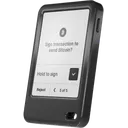
E-ink touchscreen display distinguishes the Stax from standard hardware wallets at $399, backed by ST33K1M5 secure element and support for 50 networks, though closed-source firmware limits independent verification.
The Ledger Stax is a premium device with solid security credentials but a price tag that demands scrutiny. Its EAL6+ certified ST33K1M5 secure element, 5,500-token support, and USB/Bluetooth/NFC connectivity cover most real-world use cases. At $399 with closed-source firmware and no reproducible builds, it is a hard sell for security-conscious users who prioritize auditability over form factor.
The Ledger Stax uses an ST33K1M5 secure element from STMicroelectronics, certified at EAL6+ — the highest certification level among mainstream consumer hardware wallets. For comparison, the Trezor Safe 3 uses an Infineon SLB 9670 at EAL4+, and the Coldcard Mk4 uses an ATECC608 without a formal CC certification. EAL6+ means the chip has undergone formal mathematical verification of its security properties, not just functional testing.
Genuine device verification is supported via Ledger's cryptographic attestation process: the device proves it holds a private key burned into the secure element at the factory. This is hardware-rooted and not purely software-based — a meaningful supply chain protection. That said, the firmware running on the device is closed source, reproducible builds are not available, and firmware signing is controlled entirely by Ledger. You are trusting Ledger's build and signing infrastructure with no way to independently verify what code is running.
Secure boot is implemented, preventing unsigned firmware from loading. However, Ledger's 2023 Connect Kit supply chain attack — which compromised a JavaScript library used by third-party dApps — demonstrated that the secure element alone does not protect against ecosystem-level threats. The device hardware was not breached, but users were exposed via the software layer.
Secure element: ST33K1M5, EAL6+ (vs Trezor Safe 3 at EAL4+)
Firmware: closed source, not reproducible, signed by Ledger only
Supply chain: hardware attestation present
Known incident: 2023 Connect Kit JS library compromise (software layer, not device hardware)
SecurityKey Factor
The Ledger Stax generates a 24-word BIP39 seed phrase on-device during setup. There is no SLIP39 (Shamir Secret Sharing) support — a notable gap compared to the Trezor Model T and Safe 5, both of which support Shamir's multi-share recovery natively. If you want threshold-based backup splitting, you must handle it manually outside the device.
Standard backup is paper-based: write down 24 words, store securely. Ledger also offers Ledger Recover, an optional paid subscription service ($9.99/month) that encrypts and splits your seed across three custodians (Coincover, EscrowTech, Ledger). This is vendor-operated and requires identity verification (KYC). It is opt-in, but its existence has drawn criticism from the security community because it demonstrates the seed can leave the device — a design trade-off Ledger defends as intentional and encrypted. This is not independently audited in a way that satisfies most security researchers.
BIP39 passphrase (25th word) is supported, enabling hidden wallets. Restoring on a new Ledger device or any BIP39-compatible wallet (Trezor, Coldcard, Sparrow, etc.) is straightforward: enter your 24 words and optional passphrase. Recovery is standard and not Ledger-proprietary.
Seed: 24-word BIP39, on-device generation
Shamir/SLIP39: not supported (Trezor Safe 5 supports it)
Cross-device recovery: standard BIP39, works on any compatible wallet
Recovery & backups
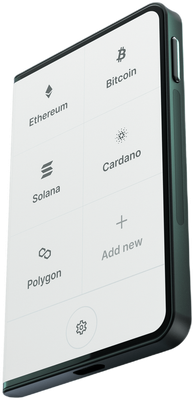
The Ledger Stax features a 3.7-inch E Ink touchscreen — the largest display on any mainstream hardware wallet. E Ink is readable in direct sunlight and consumes minimal power, but refresh rates are noticeably slower than LCD or OLED. Touch input works adequately for navigation, though it lacks the tactile precision of physical buttons on devices like the Coldcard Mk4. The curved glass front and aluminum/plastic body give it a premium feel; at 45.2g and 6mm thin, it fits in a wallet.
First-time setup via Ledger Live takes approximately 10–15 minutes including firmware update, seed generation, and account creation. Ledger Live is available on Windows, macOS, Linux, iOS, and Android — one of the broadest companion app coverages in the category. The app is polished and beginner-friendly, with a built-in buy/swap/stake interface. However, these financial features route through Ledger's partners and are not privacy-neutral.
Daily use for sending and receiving is straightforward: transaction details display clearly on the large E Ink screen, which is a genuine advantage for verifying addresses. Bluetooth and NFC connectivity allow mobile use without cables — a usability edge over the Trezor Model One, which is USB-only. NFC is present but currently limited in third-party support.
Screen: 3.7-inch E Ink touchscreen — largest in class
Connectivity: USB, Bluetooth, NFC (no QR air-gap)
Companion app: Ledger Live, all major platforms
Learning curve: low for beginners; advanced users may miss air-gap options
Usability / UX
The Ledger Stax supports 50 networks and approximately 5,500 tokens through Ledger Live and third-party integrations. Key L1 chains include Bitcoin, Ethereum, Solana, Polygon, BNB Chain, Avalanche, and Cardano. Bitcoin support includes native SegWit (bech32) and Taproot.
Third-party wallet compatibility is broad: MetaMask (via WebUSB), Electrum, Sparrow Wallet (Bitcoin-only, PSBT support), and MyEtherWallet all work with the Stax. WalletConnect v2 is supported through Ledger Live's browser extension and mobile app, enabling DeFi and NFT interactions across compatible dApps. This puts it ahead of Coldcard Mk4, which has no native EVM support and requires workarounds for anything beyond Bitcoin.
Multisig support is described as basic — Ledger Live does not offer a native multisig coordinator. Bitcoin multisig is possible via Sparrow or Electrum, but the workflow requires manual setup compared to Foundation Passport, which has more guided multisig tooling. NFT display is supported on-device via the E Ink screen, a feature unique to the Stax in this price range. EVM-compatible chain additions are handled through Ledger Live's network settings, though adding custom EVM chains is less seamless than on MetaMask-native setups.
Ecosystem & integrations
Ledger requires no account registration to use the device itself, but Ledger Live — the primary companion app — collects analytics by default. Opt-out is available in settings, but it must be done manually. Ledger's privacy policy confirms that usage data, device identifiers, and transaction metadata can be collected when using Ledger Live connected services.
The Stax has no native Tor integration. Ledger Live does not route traffic through Tor, and there is no built-in VPN support. Advanced users can route Ledger Live through a system-level VPN, but this is not officially supported or documented. For comparison, Coldcard Mk4 operates fully air-gapped via PSBT/microSD and requires no internet-connected companion app at all — a fundamentally stronger privacy posture. Foundation Passport similarly supports fully air-gapped operation via QR codes.
The Stax has no QR code capability, meaning fully offline (air-gapped) signing is not possible. USB, Bluetooth, or NFC must be used — all of which require a connected host device. CoinJoin is not natively supported in Ledger Live; Bitcoin privacy mixing requires exporting to Sparrow Wallet and using its Whirlpool or JoinMarket integrations manually.
Account required: no (for device use); Ledger Live collects analytics by default
Tor: not supported natively
Air-gap: not possible — no QR mode (Coldcard and Passport both support full air-gap)
CoinJoin: via Sparrow only, not native
Privacy
The Ledger Stax retails at $399 USD, making it the most expensive mainstream hardware wallet currently available. Direct competitors price significantly lower: the Ledger Flex is $249, the Trezor Safe 5 is $169, the Foundation Passport is $199, and the Coldcard Mk4 is $147.94 CAD (~$109 USD). The $399 price point is driven primarily by the E Ink touchscreen, curved glass design, and NFC hardware — none of which improve cryptographic security over cheaper alternatives.
The Stax's EAL6+ secure element is genuinely best-in-class, but the Ledger Flex at $249 uses the same ST33K1M5 chip with the same EAL6+ certification and nearly identical software. The $150 premium over the Flex buys a larger screen, a slightly more premium enclosure, and a built-in magnet for accessories — not a security upgrade.
Who gets value here: users who want the most polished consumer experience, plan to use the device daily for DeFi and NFT interactions, and prioritize the large E Ink display for transaction verification. The broad connectivity (USB + Bluetooth + NFC) and Ledger Live ecosystem make it genuinely convenient for active users managing diverse portfolios.
Who should look elsewhere: Bitcoin-only users should consider the Coldcard Mk4 at ~$109 for superior air-gap and privacy features. Users wanting open-source firmware should consider the Trezor Safe 5 at $169. Anyone primarily concerned with security-per-dollar will find the Stax's premium hard to justify.
Price & value
The Ledger Stax is a premium, design-forward hardware wallet that delivers genuine security innovations and a standout user experience, but its $399 price tag demands serious justification before you commit.
Buy this wallet if:
You are a long-term crypto holder who manages a diverse portfolio across 50+ networks and 5,500+ tokens and values a polished, touchscreen-driven workflow over raw minimalism.
You want Bluetooth, NFC, and USB-C connectivity all in one device and regularly switch between desktop and mobile (iOS and Android) without friction.
You prioritize certified hardware security — the EAL6+ ST33K1M5 secure element and secure boot implementation place it among the most rigorously certified consumer wallets available today.
Skip this wallet if:
You are budget-conscious: the Ledger Nano X at $149 offers the same secure element family, Bluetooth, and broad coin support for less than half the price — the E Ink screen and NFC do not close that $250 gap for most users.
You are a privacy or open-source purist: the firmware is closed-source, reproducible builds are absent, and Shamir Secret Sharing is not supported. Consider the Coldcard Mk4 or Foundation Passport instead.
You need air-gapped, QR-code-based signing — the Stax has no QR connectivity, making it unsuitable for fully offline PSBT workflows. The Keystone 3 Pro is a better fit here.
Direct comparisons: If choosing between the Ledger Stax ($399) and the Trezor Model T ($219), the Stax wins on certified secure element depth (EAL6+ vs. no dedicated SE), but the Model T counters with open-source firmware and reproducible builds — a meaningful trade-off for transparency-focused users. If choosing between the Ledger Stax ($399) and the Ledger Nano X ($149), the Stax's larger E Ink touchscreen and NFC are genuine quality-of-life upgrades, but they are lifestyle features, not security upgrades.
The Ledger Stax earns its place as a top-tier daily-driver wallet for serious holders who want premium hardware and broad ecosystem support — just ensure the price aligns with how you actually use it before purchasing.
✓ Our Verdict
The Ledger Stax is a premium, design-forward hardware wallet that delivers genuine security innovations and a standout user experience, but its $399 price tag demands serious justification before you commit.
Buy this wallet if:
You are a long-term crypto holder who manages a diverse portfolio across 50+ networks and 5,500+ tokens and values a polished, touchscreen-driven workflow over raw minimalism.
You want Bluetooth, NFC, and USB-C connectivity all in one device and regularly switch between desktop and mobile (iOS and Android) without friction.
You prioritize certified hardware security — the EAL6+ ST33K1M5 secure element and secure boot implementation place it among the most rigorously certified consumer wallets available today.
Skip this wallet if:
You are budget-conscious: the Ledger Nano X at $149 offers the same secure element family, Bluetooth, and broad coin support for less than half the price — the E Ink screen and NFC do not close that $250 gap for most users.
You are a privacy or open-source purist: the firmware is closed-source, reproducible builds are absent, and Shamir Secret Sharing is not supported. Consider the Coldcard Mk4 or Foundation Passport instead.
You need air-gapped, QR-code-based signing — the Stax has no QR connectivity, making it unsuitable for fully offline PSBT workflows. The Keystone 3 Pro is a better fit here.
Direct comparisons: If choosing between the Ledger Stax ($399) and the Trezor Model T ($219), the Stax wins on certified secure element depth (EAL6+ vs. no dedicated SE), but the Model T counters with open-source firmware and reproducible builds — a meaningful trade-off for transparency-focused users. If choosing between the Ledger Stax ($399) and the Ledger Nano X ($149), the Stax's larger E Ink touchscreen and NFC are genuine quality-of-life upgrades, but they are lifestyle features, not security upgrades.
The Ledger Stax earns its place as a top-tier daily-driver wallet for serious holders who want premium hardware and broad ecosystem support — just ensure the price aligns with how you actually use it before purchasing.
Ready to buyLedger Stax?
We may earn a commission if you purchase through our links. This doesn't affect our editorial independence.
Impermanent loss happens when asset prices in a liquidity pool diverge from external markets, reducing the value of liquidity providers' holdings compared to simply holding the assets.
EAL Certification (Evaluation Assurance Level) from Common Criteria rates the security of hardware components, like secure chips in crypto hardware wallets. Higher levels, such as EAL5+ or EAL6+, indicate stronger resistance to attacks.
Firmware Attestation is the process of verifying the authenticity of a device's firmware to ensure it has not been tampered with, commonly used in hardware wallets for security.
Reproducible Builds refer to the process where the same source code consistently produces identical binary outputs, ensuring verifiable and trustworthy software in blockchain and crypto projects.
Secure Boot is a security feature that ensures only trusted software runs on a device by verifying its integrity during startup, preventing unauthorized code execution in crypto systems.
A supply chain attack targets vulnerabilities in the production or distribution process of crypto hardware or software, compromising devices or systems before they reach the user.
BIP39 is a standard for generating mnemonic seed phrases that are used to create deterministic wallets and securely back up cryptocurrency private keys.
Shamir Secret Sharing (SSS) divides a secret, like a crypto wallet seed, into multiple shares. A threshold number of shares reconstructs it, enhancing security as in SLIP-39 backups.
Recovery is the process of restoring access to a cryptocurrency wallet using its seed phrase or mnemonic backup if the original wallet is lost or inaccessible.
A backup in cryptocurrency is a secure copy of a wallet's seed phrase or private keys. It enables recovery of funds if the original wallet is lost or damaged.
Vendor Backup is a service by hardware wallet manufacturers that securely stores encrypted seed phrase shards with third parties, enabling recovery without self-custody of the full seed.
KYC (Know Your Customer) is the regulatory process where cryptocurrency exchanges verify users' identities using documents like ID or proof of address to prevent fraud and money laundering.
A passphrase is an additional security layer for cryptocurrency wallets, acting as a 25th word in the BIP39 seed phrase, protecting access to hidden wallets.
Coldcard is an air-gapped hardware wallet for Bitcoin, made by Coinkite, that stores private keys offline and signs transactions without internet exposure.
Ledger Live is a software application that manages cryptocurrency assets and interacts with Ledger hardware wallets for secure transactions and portfolio management.
A companion app is a software application used to manage and interact with cryptocurrency wallets or blockchain networks, typically offering features like transactions and security controls.
In cryptocurrency, a swap is the direct exchange of one token for another on a blockchain, often via decentralized exchanges (DEXs) without intermediaries.
NFC Connectivity in cryptocurrency enables contactless transactions using near-field communication, allowing users to sign or authorize actions by tapping their device to a reader.
Bitcoin (BTC) is the first decentralized cryptocurrency, launched in 2009. It uses blockchain technology for secure, peer-to-peer digital transactions without intermediaries.
Ethereum is a decentralized blockchain platform that enables smart contracts and decentralized applications (dApps). Its native cryptocurrency is Ether (ETH).
Solana is a high-performance layer-1 blockchain platform that enables fast, low-cost transactions using Proof of History and Proof of Stake. Its native token is SOL.
Polygon is a layer-2 scaling solution for Ethereum that enables faster, cheaper transactions via its Proof-of-Stake sidechain. Native token: MATIC (also called Polygon PoS).
BNB Chain is a high-performance blockchain network developed by Binance, formerly Binance Smart Chain (BSC). It supports smart contracts, DeFi, and uses BNB as its native token.
Avalanche (AVAX) is a scalable layer-1 blockchain platform that achieves high throughput and sub-second transaction finality using its novel proof-of-stake consensus.
Cardano is a proof-of-stake blockchain platform that prioritizes research-driven development, scalability, and sustainability. Its native cryptocurrency is ADA.
SegWit (Segregated Witness) is a Bitcoin upgrade that moves transaction signatures to a separate data structure, increasing block capacity and enabling efficient scaling solutions like the Lightning Network.
Taproot (BIP 341) is a Bitcoin upgrade that introduces Schnorr signatures and Tapscript, enhancing privacy by making complex scripts look like simple payments and improving efficiency.
WebUSB is a browser API that lets web apps communicate directly with USB-connected hardware wallets for secure crypto transactions without plugins or native apps.
Electrum is a lightweight Bitcoin wallet that allows users to store, send, and receive Bitcoin securely. It is known for its speed and low resource usage.
PSBT (Partially Signed Bitcoin Transaction) is a Bitcoin transaction format that allows multiple parties to sign a transaction incrementally before finalizing it.
WalletConnect is a protocol that enables secure communication between decentralized applications (dApps) and mobile wallets through QR code scanning or deep linking.
DeFi (Decentralized Finance) refers to a set of financial services, such as lending and trading, built on blockchain technology without traditional intermediaries like banks.
An NFT (Non-Fungible Token) is a unique digital asset stored on a blockchain, representing ownership of a specific item, such as artwork, music, or virtual goods.
Multisig (multi-signature) is a security feature that requires multiple private keys to authorize a transaction, enhancing protection against unauthorized access in blockchain networks.
CoinJoin is a privacy technique in cryptocurrency where multiple users combine their transactions, making it harder to trace individual senders and receivers.
Cryptocurrency is a digital or virtual currency secured by cryptography, operating on decentralized blockchain networks to enable secure, peer-to-peer transactions.
USB-C Connectivity refers to the use of a USB Type-C port for fast, reversible connections in blockchain devices like hardware wallets, enabling secure data transfer and charging.
UTXO (Unspent Transaction Output) is a unit of cryptocurrency from a previous transaction that remains unspent and serves as input for new transactions in blockchains like Bitcoin.
Ledger Stax uses a certified Secure Element chip to store private keys in tamper-resistant hardware. Even if the device's software were compromised, the Secure Element isolates your keys from extraction. The device has been independently security audited.
What if Ledger goes out of business?
Your seed phrase follows the BIP39 standard, meaning you can recover your funds using any compatible wallet — you are not locked into Ledger's ecosystem.
What if I lose my Ledger Stax?
Your cryptocurrency is stored on the blockchain, not on the device. If you lose your Ledger Stax, you can recover full access using your seed phrase on any compatible wallet.
How long will Ledger Stax receive security updates?
Ledger provides long-term firmware support for Ledger Stax. The last security patch was released Oct 2025.
Is Ledger Stax safe to use?
Ledger Stax is built around a CC EAL6+ certified secure element (ST33K1M5 by STMicroelectronics), one of the highest security certifications available in consumer hardware wallets. It features secure boot, a genuine-device check, and keeps private keys fully offline. However, Ledger's firmware is not open source, and reproducible builds are not supported, which means users must trust Ledger's internal security audits. The 2023 Ledger Connect Kit supply-chain incident is worth noting, though it did not compromise the hardware itself. Overall, the hardware security is strong, but technically advanced users may prefer fully open-source alternatives.
Is Ledger Stax worth the $399 price tag?
At $399, Ledger Stax is the most expensive mainstream hardware wallet on the market. You get a premium aluminum-and-plastic build, a large 3.7-inch E Ink touchscreen, Bluetooth, NFC, USB, and support for over 5,500 tokens across 50 networks. The price is justified if you value the design, the touchscreen UX, and NFC convenience. If security alone is your priority, the Ledger Nano X ($149) or competing devices offer comparable cryptographic protection at a fraction of the cost. Stax is best suited for users who want a flagship, daily-carry device.
Ledger Stax vs Trezor Model T: which is better?
Both are premium hardware wallets, but they differ significantly:
Security chip: Ledger Stax uses a dedicated EAL6+ secure element; Trezor Model T uses a general-purpose microcontroller with no secure element.
Open source: Trezor's firmware is fully open source; Ledger's is not.
Connectivity: Stax adds Bluetooth and NFC; Model T is USB-only.
Display: Stax has a larger 3.7″ E Ink touchscreen vs Model T's 1.54″ color LCD.
Price: Stax ($399) vs Model T (~$219).
Choose Stax for connectivity and design; choose Model T if open-source firmware is a priority.
How many coins and tokens does Ledger Stax support?
Ledger Stax supports over 5,500 tokens across 50 blockchain networks, managed through the Ledger Live app on iOS, Android, Windows, macOS, and Linux. Major networks include Bitcoin, Ethereum, Solana, Polygon, and many EVM-compatible chains. ERC-20 and other token standards are broadly supported. Coin control is available for UTXO-based assets, and offline transaction signing is supported. For assets not natively listed in Ledger Live, third-party wallet apps such as MetaMask can connect via the Ethereum app on the device.
Can Ledger Stax be hacked or has it been compromised before?
The Ledger Stax hardware itself has not been publicly compromised. The EAL6+ secure element is designed to resist physical and side-channel attacks. However, Ledger as a company has faced two notable incidents: a 2020 customer database breach that exposed user email and physical addresses (not funds), and a 2023 supply-chain attack on Ledger's Connect Kit JavaScript library that affected third-party dApps. Neither incident resulted in hardware key extraction. The closed-source firmware remains a theoretical trust concern, as independent verification is not possible.
How do I set up Ledger Stax for the first time?
Setup takes roughly 10–15 minutes:
Power on the device and follow the E Ink touchscreen prompts.
Download Ledger Live on your phone or computer.
Connect via USB or Bluetooth and complete the genuine-device check.
Generate a new wallet — the device displays your 24-word BIP39 seed phrase; write it down offline and never photograph it.
Set a PIN code on the device.
Optionally add a BIP39 passphrase for extra security.
Ledger Recovery Key backup is an optional paid service. It is not required and your seed phrase remains the primary recovery method.
Does Ledger Stax support Bluetooth and NFC, and are they secure?
Yes — Ledger Stax supports Bluetooth, NFC, and USB connectivity. Bluetooth is used for wireless pairing with the Ledger Live mobile app on iOS and Android. NFC enables tap-to-interact features. Critically, private keys never leave the secure element regardless of the connection type — only signed transactions are transmitted wirelessly. Bluetooth communication is encrypted. NFC is passive and only active when the device is awake. Users who remain uncomfortable with wireless connectivity can use USB alone without any functional loss for standard operations.
Some links on this page are affiliate links. If you purchase through them, I may earn a commission at no additional cost to you. This helps support the site and allows me to continue creating detailed, independent reviews.
Our testing methodology is evolving. Ratings and assessments will be refined as we improve our scoring framework to reflect the most accurate results.
Ready to get Ledger Stax?
Long-term support • Secure Element • Security audited • Bluetooth • NFC