Ledger's flagship secure element device at $179, supporting 50 networks with closed-source firmware—a recurring transparency concern for security-focused users.
The Ledger Nano Gen5 is a capable but trust-compromised hardware wallet at $179. Its EAL6+ secure element, 2.8" E-Ink touchscreen, and NFC/Bluetooth/USB connectivity cover most use cases across 5,500 tokens. Closed-source firmware remains a hard blocker for users who require verifiable code — the proprietary stack cannot be independently audited.
The Nano Gen5 uses a secure element rated at EAL6+ — the highest certification level currently deployed in a consumer hardware wallet. For context, the Trezor Safe 3 uses an Infineon SLE97 at EAL6+, while the Coldcard Mk4 uses an ATECC608B rated only at EAL2. On paper, Ledger's SE choice is competitive at the top tier.
Genuine device verification is handled on first boot via a cryptographic attestation check against Ledger's servers — vendor claims this confirms the secure element has not been tampered with. Secure boot is implemented, meaning the device will refuse to run unsigned firmware. Firmware is signed by Ledger's own keys; reproducible builds are not available, and the firmware remains closed source. This is a meaningful limitation: you cannot independently audit what runs on the device, unlike Trezor's fully open-source firmware stack.
The Gen5 retains BOLOS (Blockchain Open Ledger Operating System), Ledger's proprietary OS. Apps run in isolated containers, but the isolation model has not been independently audited publicly. The 2023 ConnectKit supply-chain attack affected Ledger's JavaScript library, not device firmware — but it demonstrated ecosystem-level risk. No confirmed secure element exploits exist on record for this generation.
Secure element: EAL6+ (specific chip model not publicly disclosed by Ledger)
Firmware: Closed source, signed by Ledger — not independently reproducible
Supply chain check: Cryptographic attestation on setup — vendor claimed, not independently verified
SecurityKey Factor
The Nano Gen5 generates a 24-word BIP39 seed on-device during setup. Standard BIP39 is universally compatible, meaning you can restore into Electrum, Sparrow, or any BIP39-compliant wallet if Ledger ceases to exist. That's a baseline expectation, not a differentiator.
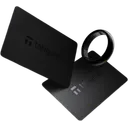
The notable addition here is the Ledger Recovery Key NFC accessory, which ships with the device. This is a proprietary NFC-based backup card that stores an encrypted copy of the seed. Vendor claims it allows recovery without writing down 24 words — the mechanism and encryption details are not publicly documented, making independent verification impossible. This is not Shamir Secret Sharing; there is no multi-card threshold scheme. Shamir (SLIP39) is absent entirely.
Passphrase support (BIP39 25th word) is present, enabling hidden wallets — a meaningful security layer if the physical device or seed is compromised. Recovery on a new device follows standard BIP39 restore: enter 24 words, reinstall apps via Ledger Live. The process takes roughly 10–15 minutes.
Compared to the Foundation Passport, which supports both BIP39 and a 4-of-4 multisigseed backup via QR codes, Ledger's backup story is weaker. Compared to Trezor Model T, which offers SLIP39 Shamir shares natively, the Gen5 lacks a multi-party backup option — a real gap for users who want geographic distribution of backup shards without trusting a single card.
Recovery & backups
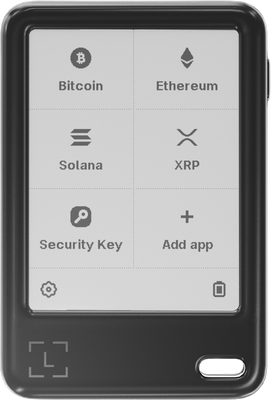
The Gen5 features a 2.8-inch E-Ink monochrome touchscreen — the largest display Ledger has shipped. E-Ink is readable in direct sunlight and consumes minimal power, but touch response on E-Ink panels is noticeably slower than LCD. Transaction confirmation requires tapping on-screen — no physical buttons for confirmation, which some security-focused users prefer for tactile certainty.
First-time setup via Ledger Live takes approximately 15–20 minutes: firmware update check, PIN creation, seed generation or import, and app installation per chain. Ledger Live is available on Windows, macOS, Linux, iOS, and Android. The companion app is polished but requires account creation for certain features (notably Ledger Recover subscription). Basic wallet use does not require an account.
Daily sending workflow: connect via USB, Bluetooth, or NFC; initiate transaction in Ledger Live or a compatible third-party app; verify address and amount on device screen; confirm by tap. The 2.8-inch screen makes address verification meaningfully easier than on the original Nano X (1.02-inch OLED). NFC connectivity is new to this generation and enables tap-to-sign with compatible mobile apps.
Compared to the Trezor Safe 5 (also touchscreen, LCD), the Gen5's E-Ink display is slower but more legible outdoors. Compared to the Coldcard Mk4 (numeric keypad, no touchscreen), the Gen5 is dramatically more approachable for non-technical users but offers less granular control during signing.
Usability / UX
The Nano Gen5 supports 50 networks and approximately 5,500 tokens — a broad but not unlimited scope. Key L1 coverage includes Bitcoin, Ethereum, Solana, Polygon, Avalanche, and Cosmos-ecosystem chains. Bitcoin support includes native SegWit (bech32) and Taproot addresses.
Third-party compatibility is strong: MetaMask hardware wallet integration works over WebUSB, Sparrow Wallet supports it for Bitcoin-only setups, and Electrum integration is functional. WalletConnect v2 is supported via Ledger Live's browser, enabling DeFi and NFT interaction without exposing keys to a browser extension.
Coin control is present, allowing manual UTXO selection in Bitcoin transactions — a feature absent on many entry-level devices. Offline signing (air-gapped) is not supported via QR code; the device requires a wired or wireless connection, which is a limitation compared to the Foundation Passport or Coldcard Mk4, both of which support fully air-gapped PSBT signing via QR or microSD. Multisig support is described as basic — Ledger Live handles simple multisig setups, but advanced coordinator tools like Sparrow or Specter are required for production multisig configurations.
No support for Monero natively within Ledger Live; a community CLI tool exists but is unsupported officially.
Ecosystem & integrations
Ledger Live requires no account for basic wallet use, but Ledger's servers are contacted during genuine-check attestation on setup and during app updates. Transaction broadcasting through Ledger Live routes through Ledger's own nodes by default — your IP address is exposed to Ledger's infrastructure unless you configure a custom node or use a VPN/Tor externally. Ledger Live has no native Tor support.
Telemetry is present in Ledger Live (analytics on app usage). Opt-out is available in settings — vendor claims it is respected, not independently verified. The optional Ledger Recover subscription (not required for standard use) involves identity verification with a third party, which is a significant privacy concern for users who opt in.
CoinJoin is not supported natively. Bitcoin privacy tools require routing through Sparrow Wallet with a Whirlpool or JoinMarket setup externally.
Compared to Coldcard Mk4 — which operates fully air-gapped, never touches the internet, and requires zero account or server contact — the Gen5's privacy posture is meaningfully weaker. Compared to Foundation Passport, which also avoids mandatory server contact and supports Tor in its companion app (Envoy), Ledger again trails on privacy defaults. The Gen5 is functional for privacy-conscious users willing to configure external tools, but it is not privacy-first by design.
Privacy
The Nano Gen5 retails at $179 USD, placing it at the premium end of the consumer hardware wallet market. Direct comparisons:
Trezor Safe 5: $169 — touchscreen, open-source firmware, no NFC, EAL6+ SE
Ledger Nano X (Gen4): ~$149 — Bluetooth, smaller screen, no NFC, EAL5+ SE
Foundation Passport Batch 2: $199 — Bitcoin-only, air-gapped QR, open-source hardware and firmware
Coldcard Mk4: $147 — Bitcoin-only, air-gapped, no touchscreen, maximum auditability
At $179, the Gen5 bundles NFC connectivity, a 2.8-inch E-Ink touchscreen, Bluetooth, and the Recovery Key NFC accessory. The NFC card's value depends entirely on trusting Ledger's undocumented encryption scheme — users who prefer standard BIP39 paper backup get no practical value from it.
Best value for: Users who want broad multi-chain support, a polished mobile experience, and are comfortable with closed-source firmware. The NFC and Bluetooth connectivity justify the premium over the Nano X for active mobile users.
Look elsewhere if: You hold primarily Bitcoin and want air-gapped signing — the Coldcard Mk4 at $147 is more capable for that use case. If open-source firmware is non-negotiable, the Trezor Safe 5 at $169 is $10 cheaper with a fully auditable stack. The $179 price is defensible but not exceptional given the closed firmware.
Price & value
The Ledger Nano Gen5 is a polished, feature-rich hardware wallet that earns its $179 price tag for power users who want cutting-edge security and broad ecosystem support, though its closed-source firmware and lack of water resistance remain genuine sticking points.
Buy this wallet if:
You manage a large, diversified portfolio and need access to 5,500+ tokens across 50+ networks without juggling multiple devices.
You want the convenience of USB, Bluetooth, and NFC connectivity in a single device — especially useful if you regularly sign transactions from both desktop and mobile.
Security certification matters to you: the EAL6+ Secure Element is among the highest ratings available in consumer hardware wallets, and the bundled Ledger Recovery Key NFC accessory gives you a tangible backup option beyond a paper seed phrase.
Skip this wallet if:
Open-source firmware is non-negotiable for your threat model. The Nano Gen5 keeps its firmware closed, meaning independent audits are limited. Consider the Foundation Passport ($199) or Coldcard Mk4 ($149) instead — both ship with fully open, auditable code.
You operate in harsh environments or need rugged durability. The plastic chassis carries no water-resistance rating; the Keystone 3 Pro ($169) offers a more robust build for field use.
You are a Shamir Secret Sharing advocate. The Nano Gen5 does not support SSS natively; the Trezor Model T ($219) handles SLIP39 Shamir backups out of the box.
If choosing between the Nano Gen5 and the Ledger Nano X ($149): The Gen5 justifies the $30 premium with its larger E-Ink touchscreen, NFC support, and the included Recovery Key accessory — worthwhile if you sign transactions frequently on mobile. If you rarely use Bluetooth and prefer saving money, the Nano X still covers the essentials.
If choosing between the Nano Gen5 and the Trezor Safe 5 ($169): The Safe 5 wins on open-source transparency; the Nano Gen5 wins on Secure Element certification depth and broader token support. Your priority — auditability versus certified hardware security — should decide it.
Our detailed scoring breakdown above reflects where the Nano Gen5 excels and where it falls short; consult those individual category ratings before making your final decision.
✓ Our Verdict
The Ledger Nano Gen5 is a polished, feature-rich hardware wallet that earns its $179 price tag for power users who want cutting-edge security and broad ecosystem support, though its closed-source firmware and lack of water resistance remain genuine sticking points.
Buy this wallet if:
You manage a large, diversified portfolio and need access to 5,500+ tokens across 50+ networks without juggling multiple devices.
You want the convenience of USB, Bluetooth, and NFC connectivity in a single device — especially useful if you regularly sign transactions from both desktop and mobile.
Security certification matters to you: the EAL6+ Secure Element is among the highest ratings available in consumer hardware wallets, and the bundled Ledger Recovery Key NFC accessory gives you a tangible backup option beyond a paper seed phrase.
Skip this wallet if:
Open-source firmware is non-negotiable for your threat model. The Nano Gen5 keeps its firmware closed, meaning independent audits are limited. Consider the Foundation Passport ($199) or Coldcard Mk4 ($149) instead — both ship with fully open, auditable code.
You operate in harsh environments or need rugged durability. The plastic chassis carries no water-resistance rating; the Keystone 3 Pro ($169) offers a more robust build for field use.
You are a Shamir Secret Sharing advocate. The Nano Gen5 does not support SSS natively; the Trezor Model T ($219) handles SLIP39 Shamir backups out of the box.
If choosing between the Nano Gen5 and the Ledger Nano X ($149): The Gen5 justifies the $30 premium with its larger E-Ink touchscreen, NFC support, and the included Recovery Key accessory — worthwhile if you sign transactions frequently on mobile. If you rarely use Bluetooth and prefer saving money, the Nano X still covers the essentials.
If choosing between the Nano Gen5 and the Trezor Safe 5 ($169): The Safe 5 wins on open-source transparency; the Nano Gen5 wins on Secure Element certification depth and broader token support. Your priority — auditability versus certified hardware security — should decide it.
Our detailed scoring breakdown above reflects where the Nano Gen5 excels and where it falls short; consult those individual category ratings before making your final decision.
Ready to buyLedger Nano Gen5?
We may earn a commission if you purchase through our links. This doesn't affect our editorial independence.
Impermanent loss happens when asset prices in a liquidity pool diverge from external markets, reducing the value of liquidity providers' holdings compared to simply holding the assets.
EAL Certification (Evaluation Assurance Level) from Common Criteria rates the security of hardware components, like secure chips in crypto hardware wallets. Higher levels, such as EAL5+ or EAL6+, indicate stronger resistance to attacks.
Firmware Attestation is the process of verifying the authenticity of a device's firmware to ensure it has not been tampered with, commonly used in hardware wallets for security.
Secure Boot is a security feature that ensures only trusted software runs on a device by verifying its integrity during startup, preventing unauthorized code execution in crypto systems.
Reproducible Builds refer to the process where the same source code consistently produces identical binary outputs, ensuring verifiable and trustworthy software in blockchain and crypto projects.
BIP39 is a standard for generating mnemonic seed phrases that are used to create deterministic wallets and securely back up cryptocurrency private keys.
Electrum is a lightweight Bitcoin wallet that allows users to store, send, and receive Bitcoin securely. It is known for its speed and low resource usage.
Recovery is the process of restoring access to a cryptocurrency wallet using its seed phrase or mnemonic backup if the original wallet is lost or inaccessible.
A Recovery Card is a physical card or sheet for backing up a cryptocurrency wallet's seed phrase, enabling recovery if the original wallet is lost or damaged.
Shamir Secret Sharing (SSS) divides a secret, like a crypto wallet seed, into multiple shares. A threshold number of shares reconstructs it, enhancing security as in SLIP-39 backups.
A passphrase is an additional security layer for cryptocurrency wallets, acting as a 25th word in the BIP39 seed phrase, protecting access to hidden wallets.
Ledger Live is a software application that manages cryptocurrency assets and interacts with Ledger hardware wallets for secure transactions and portfolio management.
Multisig (multi-signature) is a security feature that requires multiple private keys to authorize a transaction, enhancing protection against unauthorized access in blockchain networks.
A backup in cryptocurrency is a secure copy of a wallet's seed phrase or private keys. It enables recovery of funds if the original wallet is lost or damaged.
A block confirmation is the process of verifying a new block in the blockchain network, confirming its validity and preventing double-spending or fraud.
A companion app is a software application used to manage and interact with cryptocurrency wallets or blockchain networks, typically offering features like transactions and security controls.
Vendor Backup is a service by hardware wallet manufacturers that securely stores encrypted seed phrase shards with third parties, enabling recovery without self-custody of the full seed.
Address Verification confirms the receiving address shown on a hardware wallet's screen matches the one on the computer or app, preventing malware from altering it.
NFC Connectivity in cryptocurrency enables contactless transactions using near-field communication, allowing users to sign or authorize actions by tapping their device to a reader.
Bitcoin (BTC) is the first decentralized cryptocurrency, launched in 2009. It uses blockchain technology for secure, peer-to-peer digital transactions without intermediaries.
Ethereum is a decentralized blockchain platform that enables smart contracts and decentralized applications (dApps). Its native cryptocurrency is Ether (ETH).
Solana is a high-performance layer-1 blockchain platform that enables fast, low-cost transactions using Proof of History and Proof of Stake. Its native token is SOL.
Polygon is a layer-2 scaling solution for Ethereum that enables faster, cheaper transactions via its Proof-of-Stake sidechain. Native token: MATIC (also called Polygon PoS).
Avalanche (AVAX) is a scalable layer-1 blockchain platform that achieves high throughput and sub-second transaction finality using its novel proof-of-stake consensus.
Cosmos is a blockchain ecosystem enabling interoperable chains via the Cosmos SDK and IBC protocol. The Cosmos Hub serves as its central chain with the ATOM token.
SegWit (Segregated Witness) is a Bitcoin upgrade that moves transaction signatures to a separate data structure, increasing block capacity and enabling efficient scaling solutions like the Lightning Network.
Taproot (BIP 341) is a Bitcoin upgrade that introduces Schnorr signatures and Tapscript, enhancing privacy by making complex scripts look like simple payments and improving efficiency.
WebUSB is a browser API that lets web apps communicate directly with USB-connected hardware wallets for secure crypto transactions without plugins or native apps.
WalletConnect is a protocol that enables secure communication between decentralized applications (dApps) and mobile wallets through QR code scanning or deep linking.
DeFi (Decentralized Finance) refers to a set of financial services, such as lending and trading, built on blockchain technology without traditional intermediaries like banks.
An NFT (Non-Fungible Token) is a unique digital asset stored on a blockchain, representing ownership of a specific item, such as artwork, music, or virtual goods.
Coin Control is a feature that allows users to manually select which unspent transaction outputs (UTXOs) to use in a transaction, giving more control over privacy and fees.
UTXO (Unspent Transaction Output) is a unit of cryptocurrency from a previous transaction that remains unspent and serves as input for new transactions in blockchains like Bitcoin.
Offline Signing refers to signing cryptocurrency transactions on a device that is not connected to the internet, ensuring private keys remain secure from online threats.
Bluetooth Connectivity enables wireless communication between devices, like hardware wallets and smartphones, using Bluetooth or Bluetooth Low Energy (BLE) for secure data transfer.
PSBT (Partially Signed Bitcoin Transaction) is a Bitcoin transaction format that allows multiple parties to sign a transaction incrementally before finalizing it.
Specter is a Bitcoin hardware wallet solution designed for advanced users, offering secure storage through a customizable, self-hosted setup with options like Specter Desktop and Specter DIY.
Monero (XMR) is a privacy-focused cryptocurrency that uses ring signatures, stealth addresses, and RingCT to obscure sender, receiver, and transaction amounts on the blockchain.
Telemetry in cryptocurrency and blockchain refers to the automatic collection and transmission of anonymous usage data, metrics, and error reports from wallets or nodes to improve software.
KYC (Know Your Customer) is the regulatory process where cryptocurrency exchanges verify users' identities using documents like ID or proof of address to prevent fraud and money laundering.
CoinJoin is a privacy technique in cryptocurrency where multiple users combine their transactions, making it harder to trace individual senders and receivers.
HODL is cryptocurrency slang for holding assets long-term despite price volatility, rather than selling. It originated from a 2013 forum post misspelling 'hold' as 'I AM HODLING.'
Ledger Nano Gen5 uses a certified Secure Element chip to store private keys in tamper-resistant hardware. Even if the device's software were compromised, the Secure Element isolates your keys from extraction. The device has been independently security audited.
What if Ledger goes out of business?
Your seed phrase follows the BIP39 standard, meaning you can recover your funds using any compatible wallet — you are not locked into Ledger's ecosystem.
What if I lose my Ledger Nano Gen5?
Your cryptocurrency is stored on the blockchain, not on the device. If you lose your Ledger Nano Gen5, you can recover full access using your seed phrase on any compatible wallet.
How long will Ledger Nano Gen5 receive security updates?
Ledger actively maintains Ledger Nano Gen5 with regular firmware updates.
Is the Ledger Nano Gen5 safe to use?
Yes, the Ledger Nano Gen5 is one of the most secure consumer hardware wallets available. It features a CC EAL6+ certified Secure Element chip — the highest certification level found in any retail crypto hardware wallet — along with Secure Boot, a genuine check mechanism, and an E-Ink touchscreen that keeps transaction details fully on-device. Private keys never leave the device. The addition of NFC, Bluetooth, and USB connectivity does expand the attack surface compared to air-gapped devices, so users with extreme security requirements should weigh that trade-off carefully.
Ledger Nano Gen5 vs Trezor Model T: which is better?
Both are premium hardware wallets, but they differ in key areas:
Security chip: Ledger uses an EAL6+ Secure Element; Trezor Model T relies on a general-purpose microcontroller with no dedicated secure element.
Open source: Trezor's firmware is fully open source; Ledger's is not.
Connectivity: Ledger Nano Gen5 adds Bluetooth and NFC; Trezor Model T is USB-only.
Coin support: Ledger supports ~5,500 tokens across 50 networks vs Trezor's broader altcoin list via third-party wallets.
Choose Ledger Gen5 for hardware-level security; choose Trezor if open-source firmware is a priority.
How many coins does the Ledger Nano Gen5 support?
The Ledger Nano Gen5 supports over 5,500 tokens across 50 blockchain networks, including Bitcoin, Ethereum, Solana, Polygon, BNB Chain, and many EVM-compatible chains. Token management is handled through the Ledger Live app on iOS, Android, Windows, macOS, and Linux. For assets not natively listed in Ledger Live, third-party wallets like MetaMask or Rabby can connect via USB or Bluetooth, significantly extending the range of supported assets beyond the official count.
What are the known concerns or vulnerabilities with the Ledger Nano Gen5?
The main concerns users raise include:
Closed-source firmware: Ledger's OS and firmware are not publicly auditable, which requires trusting Ledger's internal security processes.
2023 data breach legacy: A prior customer database leak exposed email and physical addresses of Ledger customers — unrelated to device security but a real privacy concern.
Ledger Recover controversy: An optional cloud seed-shard backup service raised community concerns about seed phrase exposure, though it remains opt-in and is separate from the Gen5's default operation.
No hardware exploit has been publicly demonstrated on the EAL6+ Secure Element itself.
Is the Ledger Nano Gen5 worth the $179 price tag?
At $179 USD, the Ledger Nano Gen5 is priced at the premium end of the hardware wallet market. You get an EAL6+ Secure Element, a 2.8-inch E-Ink touchscreen, Bluetooth, NFC, USB, and the bundled Ledger Recovery Key NFC accessory for backup — features that justify the cost for serious holders. Casual users storing a modest portfolio may find the Ledger Nano X (~$149) sufficient. For high-value holdings or users who want the latest security certification and connectivity options, the Gen5 represents good value.
How do I set up and recover the Ledger Nano Gen5?
Setup takes roughly 10–15 minutes:
Power on the device and follow the on-screen prompts to generate a new wallet or restore an existing one.
The device generates a 24-word BIP39 seed phrase — write it down and store it offline securely.
Optionally, use the included Ledger Recovery Key NFC card to store an encrypted backup of your seed via NFC tap.
Install Ledger Live on your phone or desktop and connect via USB, Bluetooth, or NFC.
Recovery is standard BIP39-compatible, meaning you can restore your wallet on any compatible device using your 24-word phrase. Passphrase (25th word) support is also available for advanced users.
Does the Ledger Nano Gen5 work with iPhone and Android?
Yes. The Ledger Nano Gen5 is compatible with iOS and Android via the Ledger Live mobile app. It connects to smartphones using Bluetooth or NFC, eliminating the need for a cable on mobile. NFC support is particularly convenient for quick transaction signing with a single tap. Desktop support covers Windows, macOS, and Linux via USB or WebUSB. This broad compatibility makes it one of the most versatile hardware wallets for users who switch between devices frequently.
Some links on this page are affiliate links. If you purchase through them, I may earn a commission at no additional cost to you. This helps support the site and allows me to continue creating detailed, independent reviews.
Our testing methodology is evolving. Ratings and assessments will be refined as we improve our scoring framework to reflect the most accurate results.
Ready to get Ledger Nano Gen5?
Long-term support • Secure Element • Security audited • Bluetooth • NFC