Ledger Hardware Wallets
Ledger designs hardware wallets that store cryptocurrency private keys offline, emphasizing security and ease of use. The brand is recognized for its robust firmware and certified secure element chips. It is well suited for users who prioritize strong protection for their digital assets, from individual investors to institutional custodians.
Ledger Wallet Models
Explore the complete range of Ledger hardware wallets designed for different needs and budgets.
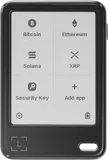 Top Pick
Ledger Nano Gen5
Ledger's flagship secure element device at $179, supporting 50 networks with closed-source firmware—a recurring transparency concern for security-focused users.
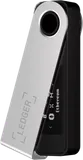 Best Value
Ledger Nano S Plus
ST33K1M5 secure element protects keys at $69, supporting 50 networks via Ledger's closed-source firmware.
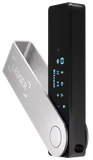
Ledger Nano X
Bluetooth-enabled hardware wallet with a certified ST33J2M0 secure element supporting 50 networks at $149, though its closed-source firmware limits independent security verification.
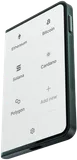 Premium Choice
Ledger Stax
E-ink touchscreen display distinguishes the Stax from standard hardware wallets at $399, backed by ST33K1M5 secure element and support for 50 networks, though closed-source firmware limits independent verification.
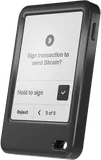
Ledger Flex
Ledger's first touchscreen hardware wallet at $249, featuring a certified ST33K1M5 secure element and support for 50 networks, with closed-source firmware.
Compare Ledger Models
Side-by-side comparison of all Ledger hardware wallets to help you choose the right one.
Pros & Cons of Ledger Wallets
Pros
- Strong security with offline storage and multi-factor authentication
- Wide ecosystem support for hundreds of cryptocurrencies
- Reputable brand with a large, active user community
- Responsive customer support and regular firmware updates
- User-friendly interface with intuitive setup process
Cons
- Higher price point compared to some competitors
- Core firmware is not fully open source, limiting transparency
- Steep learning curve for non-technical users
- Limited customization options for advanced users
Ledger Rating Summary
How We Rate Ledger Wallets
Every rating is based on 40 measurable parameters with a fully transparent, open formula. No pay-to-play, no hidden criteria.
Which Ledger Should You Buy?
Quick guide to choosing the right Ledger wallet based on your needs.
Ready to Choose Your Ledger Wallet?
Based on our analysis, the Ledger Nano Gen5 is the top-rated model with a score of 77/100.
Who Is Ledger Best For?
Ledger wallets are designed for specific types of users and use cases.
Beginners
New crypto users who need a simple, plug‑and‑play solution benefit from Ledger's straightforward setup and clear onboarding guides.
Learn More →Long‑term Holders
Investors storing assets for years appreciate Ledger's air‑gapped security and durable hardware, which keep private keys offline and resistant to malware.
Learn More →Mobile Users
People who manage crypto on the go can pair Ledger devices with smartphones via Bluetooth, allowing secure transactions without a desktop.
Learn More →Advanced Traders
Active traders who need rapid signing of multiple transactions benefit from Ledger's support for a wide range of assets and integration with professional trading platforms.
Learn More →Ledger vs Other Wallets
See how Ledger compares to other leading hardware wallet brands.


Ledger vs Trezor
Ledger vs Trezor: contrasting open-source policies and firmware updates.

Ledger vs BitBox
Ledger and BitBox: comparing secure element usage and UI design.

Ledger vs Ellipal
Ledger vs Ellipal: hardware isolation versus air-gapped architecture.

Ledger vs CoolWallet
Ledger and CoolWallet: mobile form factor versus traditional desktop device.
About Ledger
Ledger, headquartered in France, was founded to address the growing need for secure offline storage of digital assets. Since its launch, the company has expanded its product line to cover a broad range of cryptocurrencies while maintaining a focus on hardware reliability.
The core philosophy centers on uncompromising security, with a layered design that isolates private keys from potential online threats. Ledger emphasizes usability, offering a user-friendly interface that balances protective features with accessibility for both novice and experienced users.
In the competitive hardware wallet market, Ledger is recognized for its robust encryption protocols and frequent firmware updates. It enjoys strong credibility among institutional investors and crypto enthusiasts alike, thanks to transparent security audits and a track record of rapid response to emerging vulnerabilities.
Key differentiators include a proprietary secure element chip, a proprietary Ledger Live software ecosystem, and a commitment to open-source code for certain components, allowing independent developers to audit and contribute. These attributes combine to position Ledger as a trusted, secure, and user-oriented brand in the digital asset space.
Security
Certified Secure Element chip (CC EAL5+), custom OS, and regular security audits.
Ease of Use
Ledger Live app with seamless setup, intuitive interface, and mobile integration.
Compatibility
Supports 5,500+ cryptocurrencies and NFTs across multiple blockchains.
FAQ About Ledger Hardware Wallets
Is Ledger safe?
Ledger devices employ a trusted execution environment (TEE) to isolate transaction signing from the host computer. PIN protection and passphrase support add layers of security. The recovery seed is stored offline, allowing full restoration if the device is damaged or lost.
Is Ledger open-source?
Ledger’s firmware is partially open-source; core security modules are publicly available on GitHub. However, some proprietary components remain closed to protect the developer environment. Users can audit the open parts to verify integrity.
Does Ledger support Bitcoin only or multiple coins?
Ledger devices support a wide range of cryptocurrencies, including Bitcoin, Ethereum, Litecoin, and many ERC‑20 tokens. The Ledger Live app provides a unified interface to manage all supported assets. Users can add new coins by installing the corresponding app on the device.
What happens if a Ledger wallet is lost?
In the event of a lost device, the 24‑word recovery seed can restore all assets to a new Ledger or compatible wallet. The seed is never transmitted over the network, so it remains under the user’s sole control. Losing the seed, however, means permanent loss of funds.
Where is Ledger based?
Ledger is headquartered in Paris, France, and operates globally with offices in several countries. The company follows European data protection regulations and maintains a strong presence in the crypto security industry.
How does Ledger protect against malware?
Ledger’s TEE ensures that private keys never leave the device, even if the connected computer is compromised. The Ledger Live application verifies firmware signatures before installing updates. Users are advised to download Ledger Live from the official website to avoid phishing.




Compare Ledger Hardware Wallets
Take a closer look at Ledger's different models to see which fits your security needs best.
See Best Hardware Wallets