Unified Accounts
Unified Accounts enable a single address to manage multiple assets and functions on blockchains via account abstraction, simplifying user interactions.
What Is a Unified Accounts?
A Unified Account is a blockchain address that uses account abstraction to manage multiple assets and execute various functions from a single point. It simplifies interactions by eliminating the need for separate addresses per chain or application. Users treat it like a smart contract wallet.
Traditional Externally Owned Accounts (EOAs) rely on private keys for signing transactions. Unified Accounts run as smart contracts. They validate user intent through custom logic, such as multi-signatures or session keys. Standards like ERC-4337 introduce bundlers and paymasters. Bundlers package transactions into UserOperations. Paymasters cover gas fees using ERC-20 tokens, enabling gasless experiences.
For example, a user deposits ETH, swaps for USDC, and approves an NFT—all in one bundled transaction. The account executes atomically or reverts entirely.
Unified Accounts improve security and usability. They reduce private key exposure via social recovery and key rotation. Users avoid managing multiple seed phrases. This boosts adoption by streamlining onboarding and cross-chain operations.
Key characteristics include programmability, fee abstraction, and interoperability. Synonyms encompass account abstraction and single address concepts.
Account Abstraction lets smart contracts control accounts, enabling flexible transaction rules and gas payment options beyond standard wallets.
Read full definitionA smart contract wallet is a blockchain wallet implemented as a smart contract, enabling features like account abstraction, gas sponsorship, and programmable security beyond traditional externally owned accounts.
Read full definitionERC-20 Token is a fungible token standard on the Ethereum blockchain. It defines rules for creating, transferring, and managing tokens uniformly.
Read full definitionEthereum is a decentralized blockchain platform that enables smart contracts and decentralized applications (dApps). Its native cryptocurrency is Ether (ETH).
Read full definitionA stablecoin is a cryptocurrency designed to maintain a stable value, typically pegged to a fiat currency like the US dollar or backed by reserves.
Read full definitionAn NFT (Non-Fungible Token) is a unique digital asset stored on a blockchain, representing ownership of a specific item, such as artwork, music, or virtual goods.
Read full definitionSocial Recovery allows users to regain access to their crypto wallet through approvals from trusted guardians or contacts, bypassing traditional seed phrases.
Read full definitionInteroperability in blockchain refers to the ability of different blockchain networks to communicate and exchange data or value seamlessly, enabling cross-chain functionality.
Read full definitionA paymaster is a blockchain entity that sponsors transaction fees, enabling users to execute transactions without paying gas fees directly, often used in gasless transactions.
Read full definitionReal-World Examples
Example 1: DeFi Bundled Transaction
A user deposits ETH into their unified account, swaps it for USDC on Uniswap, and supplies it to Aave liquidity pool. The bundler packages these as one UserOperation. The transaction executes atomically or reverts entirely, saving time and gas.
Example 2: Gasless NFT Purchase
Bob wants to buy an NFT on OpenSea without ETH for gas. His unified account uses a paymaster sponsored by USDC. He approves the spend, and the paymaster covers fees. Bob completes the purchase seamlessly.
Example 3: Cross-Chain Swaps
- Charlie holds assets on Ethereum and Polygon.
- His unified account bridges tokens from Polygon to Ethereum.
- It then swaps for BTC via a wrapped asset—all from one interface.
- No need for separate chain-specific wallets.
Example 4: Social Recovery
David loses access to his session key. Guardians—trusted contacts—sign a recovery transaction. The unified account's smart contract logic verifies and rotates to a new key, restoring access without exposing the master seed.
DeFi (Decentralized Finance) refers to a set of financial services, such as lending and trading, built on blockchain technology without traditional intermediaries like banks.
Read full definitionEthereum is a decentralized blockchain platform that enables smart contracts and decentralized applications (dApps). Its native cryptocurrency is Ether (ETH).
Read full definitionA stablecoin is a cryptocurrency designed to maintain a stable value, typically pegged to a fiat currency like the US dollar or backed by reserves.
Read full definitionA lending protocol is a DeFi smart contract platform on blockchain where users lend crypto to earn interest and borrow assets using collateral.
Read full definitionA liquidity pool is a smart contract holding paired cryptocurrency reserves. It powers decentralized trading on AMMs like Uniswap by enabling automated swaps.
Read full definitionAn NFT (Non-Fungible Token) is a unique digital asset stored on a blockchain, representing ownership of a specific item, such as artwork, music, or virtual goods.
Read full definitionA paymaster is a blockchain entity that sponsors transaction fees, enabling users to execute transactions without paying gas fees directly, often used in gasless transactions.
Read full definitionInteroperability in blockchain refers to the ability of different blockchain networks to communicate and exchange data or value seamlessly, enabling cross-chain functionality.
Read full definitionPolygon is a layer-2 scaling solution for Ethereum that enables faster, cheaper transactions via its Proof-of-Stake sidechain. Native token: MATIC (also called Polygon PoS).
Read full definitionBitcoin (BTC) is the first decentralized cryptocurrency, launched in 2009. It uses blockchain technology for secure, peer-to-peer digital transactions without intermediaries.
Read full definitionA wrapped token represents a cryptocurrency or asset from another blockchain on a target chain, pegged 1:1 for interoperability. Examples: WBTC (Bitcoin on Ethereum), WETH.
Read full definitionSocial Recovery allows users to regain access to their crypto wallet through approvals from trusted guardians or contacts, bypassing traditional seed phrases.
Read full definitionRecovery is the process of restoring access to a cryptocurrency wallet using its seed phrase or mnemonic backup if the original wallet is lost or inaccessible.
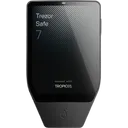
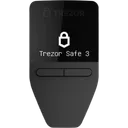
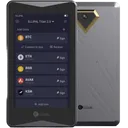
Read full definitionHardware Wallets by Unified Accounts
Browse wallets grouped by this feature












Ready to Choose a Secure Wallet?
Use our tools to find the right hardware wallet for your needs.